Safe Streets, Server Farms and Property Value: When Technology Moves Next Door
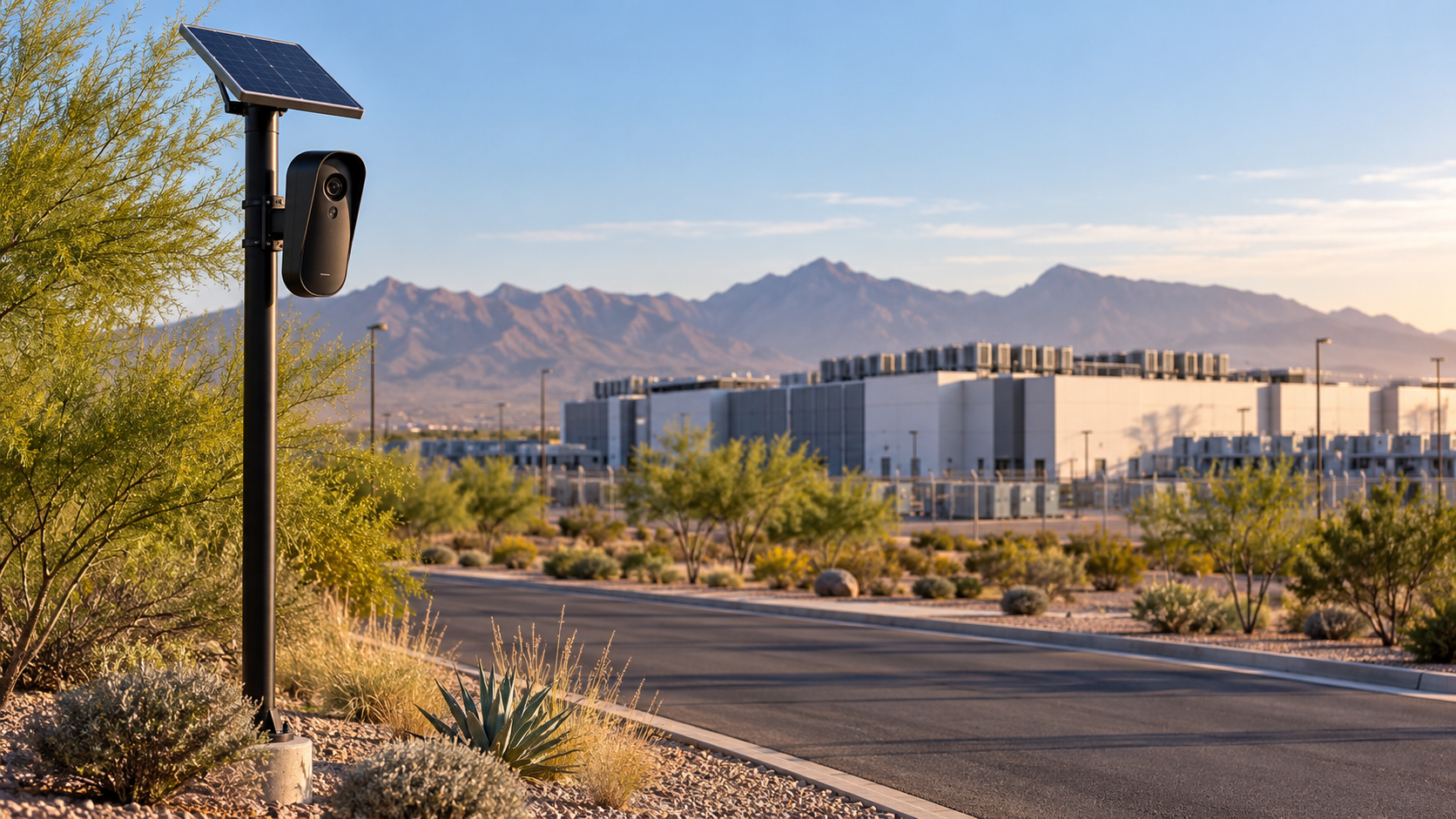
Technology does not arrive in a neighborhood empty-handed.
A data center may bring tax revenue, construction activity and infrastructure investment. It may also bring cooling equipment, backup generators, electrical substations and a large industrial building that operates around the clock.
An automated license-plate-reading camera may help law enforcement locate a stolen vehicle or identify a suspect. It may also record the movements of thousands of innocent drivers who have done nothing wrong.
Both technologies are usually presented as public improvements. Data centers support the digital economy. Camera networks promise safer streets. But the appraisal question is narrower and more difficult:
Do buyers recognize either technology as a benefit or a burden—and does that reaction become measurable in the prices they are willing to pay?
The answer, at least today, is not a simple yes or no.
Youngtown: A Camera on Almost Every Block
Youngtown, Arizona, provides an unusually concentrated example of automated license-plate-reader deployment.
The community covers approximately 1.5 square miles and has a population of roughly 7,000. As of 2026, Youngtown has approximately 40 Flock Safety cameras distributed around town—close to one camera for every block. Many of the cameras are located along 111th Avenue and other primary travel routes. Youngtown does not operate its own police department and instead contracts with the Maricopa County Sheriff’s Office for law-enforcement services.
Youngtown’s municipal website describes “some three dozen” Flock cameras. According to the town, the system can identify a vehicle’s make, type, color, state of registration, partial or missing license plate and features such as roof racks, trailer hitches and tinted windows. The town says the cameras do not use facial recognition, are not intended for traffic enforcement and ordinarily delete captured data after 30 days.
The town’s Flock camera program appears to date to approximately 2021, and has expanded rapidly in the past 5 years. A 2025 town agenda listed a Flock services agreement not to exceed $146,000, demonstrating that this is a meaningful municipal program rather than a handful of isolated cameras.
Youngtown therefore gives us something close to a natural experiment:
A small and geographically compact housing market
A relatively identifiable deployment period
An unusually high concentration of cameras
Nearby communities that could potentially serve as comparison markets
Several years of transactions since the initial installation
At first glance, it sounds as though determining the effect on property values should be easy. Look at prices before the cameras, compare them with prices after the cameras and calculate the difference.
Unfortunately, that would probably produce a misleading answer.
What Happened to Youngtown Home Values?
Youngtown home values increased substantially during the years following the initial camera installation. But so did home values across most of metropolitan Phoenix.
Low mortgage rates, limited inventory, pandemic-era migration and unusually strong housing demand drove prices upward throughout the Valley in 2021 and 2022. A large increase in Youngtown prices after the cameras arrived does not prove that cameras caused the increase.
More recently, Youngtown prices have softened. MLS data reported a median sale price of approximately $350,000 for the three months ending in August, down about 4.2%. Only 27 homes reportedly sold during August, however, so shifts in the type and condition of the homes sold can produce substantial changes in the median.
That decline is not unique to Youngtown. MLS data for neighboring Sun City was down approximately 3.1% during the same period—almost identical to its reported decline for Youngtown.
This comparison does not prove that the cameras had no influence. It does suggest that recent changes in Youngtown values are more readily explained by broader housing-market conditions than by the presence of automated cameras.
Mortgage rates, affordability, buyer demand, property condition and the number and composition of available listings continue to have notable influences on recent price movement.
Based on the currently available evidence, I could not identify a defensible camera-related premium or discount in Youngtown.
No Evidence Is Not the Same as No Effect
This distinction is important.
A statement that “Flock cameras have not affected Youngtown property values” would be too strong. What we can responsibly say is:
There is not yet convincing market evidence demonstrating that the cameras have caused Youngtown home values to rise or fall.
There are several ways the cameras could theoretically create a positive market reaction.
If they help reduce vehicle theft, burglary or other property crime, some buyers may feel safer. A measurable and sustained crime reduction could improve a neighborhood’s reputation, strengthen demand and possibly reduce insurance losses. Buyers who have experienced a theft may view the cameras as a meaningful community amenity.
There are also possible negative reactions.
Some buyers may dislike being recorded whenever they enter or leave their neighborhood. Cameras mounted near homes may be regarded as visual clutter or as a sign that the area has a crime problem. Other buyers may be concerned about how the data are searched, retained or shared, even when a municipality has adopted safeguards.
Those concerns are not entirely hypothetical. Arizona municipalities have investigated alleged misuse of automated license-plate databases. Chandler discontinued its fixed-camera program after an audit found that an officer had used the system to search for a family member. Other Valley communities have canceled contracts, limited access or disabled external searches as questions about accountability and data sharing have increased.
A system can therefore be perceived simultaneously as a public-safety tool and a privacy risk. Different buyers can look at the same camera and reach opposite conclusions.
When those reactions offset one another—or when most buyers simply do not consider the cameras during their purchase decision—the net effect on price may be too small to measure.
Do the Cameras Actually Reduce Crime?
Youngtown’s website says Flock systems have been shown to reduce crime by as much as 70%. That figure should be understood as a claim presented in support of the program, not as proof that Youngtown crime declined by 70% because of its cameras.
A camera locating a stolen vehicle is evidence that the system can assist an investigation. It is not, by itself, evidence of a community-wide reduction in crime.
To demonstrate causation, we would want to know:
What happened to Youngtown’s crime rate after installation?
Did comparable communities without the same camera density experience similar changes?
Were there changes in patrol levels, reporting practices or law-enforcement staffing?
Did crime decline, or did some offenses simply move beyond the camera network?
Were the changes temporary or sustained?
Did residents and prospective buyers actually become aware of the change?
Even if the cameras reduced crime, another step would still be required before concluding that they increased home values. Buyers would have to recognize the improvement and capitalize it into their purchase decisions.
A law-enforcement benefit does not automatically become a real estate premium.
How Youngtown Could Be Studied Properly
A more credible study would examine several years of individual sales rather than relying on annual median prices.
Properties sold before and after the camera deployment could be matched by location, age, size, condition, lot characteristics and property type. Repeat sales of the same homes would be particularly useful.
Youngtown’s results could then be compared with nearby areas such as Sun City and portions of El Mirage, while accounting for differences in age-restricted housing, ownership patterns and neighborhood characteristics.
The analysis would also need to identify each home’s relationship to the camera network:
Is a camera visible from the property?
Is it immediately adjacent to the home or several blocks away?
Is it located on a quiet residential street or a major arterial?
Was the camera present at the time of sale?
Did listings mention security or public safety?
Did homes near cameras experience different marketing times, concessions or price changes?
This is the sort of analysis that could reveal whether the cameras affect individual properties differently from the community as a whole.
For example, a town-wide network could provide a small perceived-safety benefit while an especially visible camera directly outside one home creates a localized appearance or privacy concern. A community average could conceal both effects.
Until such research is completed, a specific positive or negative appraisal adjustment would be difficult to defend.
Data Centers: A Much Larger Neighbor
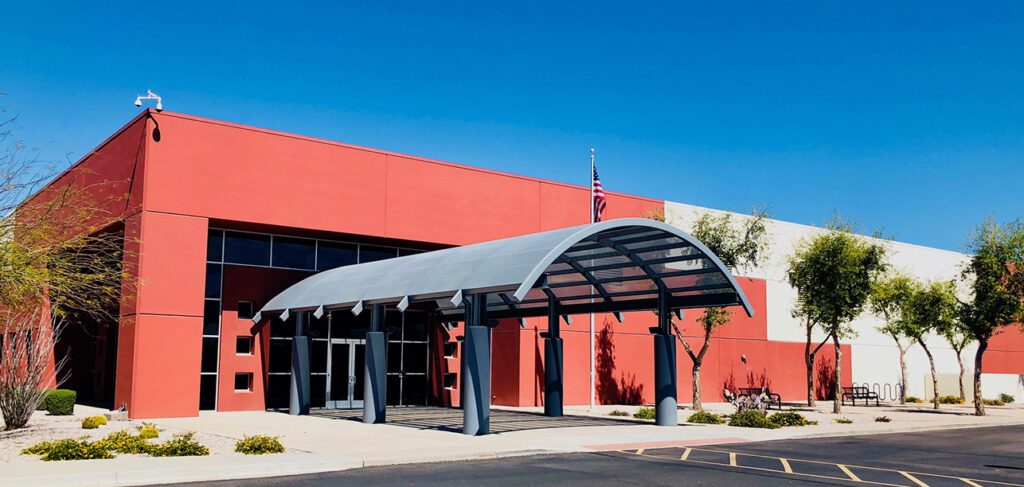
Data centers present a different valuation question.
A Flock camera is small, inexpensive and physically unobtrusive. A data center can occupy dozens or hundreds of acres and may include massive buildings, cooling systems, backup generators, substations, high-voltage infrastructure and security fencing.
Phoenix has become one of the country’s largest data-center markets. Facilities operated or planned by major technology and data companies are located throughout the metropolitan area, including Mesa, Chandler, Goodyear and El Mirage. The growth is driven by available land, major fiber connections, a relatively low risk of natural disasters and access to regional infrastructure.
From a regional economic perspective, data centers can look attractive. They require major capital investment and generate construction activity, equipment purchases and property or transaction-based tax revenue. They can also encourage improvements to electrical, fiber and transportation infrastructure.
But regional benefits and neighborhood impacts are not the same thing.
A municipality may receive tax revenue from a data center while a nearby homeowner experiences mechanical noise or looks at a large industrial wall. The benefits are spread across a city, while the burdens may be concentrated among a relatively small number of properties.
That difference is at the heart of the valuation issue.
For the record, I have a personal connection to this topic. EdgeConneX is currently constructing a three-building data center complex totaling nearly 1,200,000 square feet within ¼ mile of my home. In addition to the three data halls, the development will include an administrative building and an electrical substation.
The project has brought some benefits to the surrounding community, including the installation of fiber-optic internet infrastructure in my neighborhood. However, the larger question remains: What impact, if any, will the completed complex have on surrounding residential property values?
This is a legitimate concern for neighborhood residents, particularly the owners of the 33 homes that either back directly to or face the ongoing development. Among the primary concerns are potential mechanical noise from backup generators and cooling systems, as well as increased ambient heat resulting from the operation of the facilities.
My recent market research indicates that my neighborhood, along with other existing and newly developed residential communities within ½ mile of the complex, is experiencing trends consistent with the broader slowing housing market. These include increasing listing inventory, longer marketing times for active listings, and a growing percentage of listings requiring price reductions.
The challenge will be distinguishing broader market conditions from any measurable impact attributable specifically to the data center development. As the complex becomes operational, I intend to closely monitor neighborhood sales activity, comparing properties directly adjacent to the development with those located farther away. The objective is to determine whether proximity to the facility has a demonstrable influence on buyer behavior, marketability, and ultimately, residential property values.
As both a nearby homeowner and a professional real estate appraiser, I have a personal interest in the outcome, but I also recognize the importance of allowing actual market evidence, rather than assumptions or perceptions, to guide any conclusions.
What Does the Research Say?
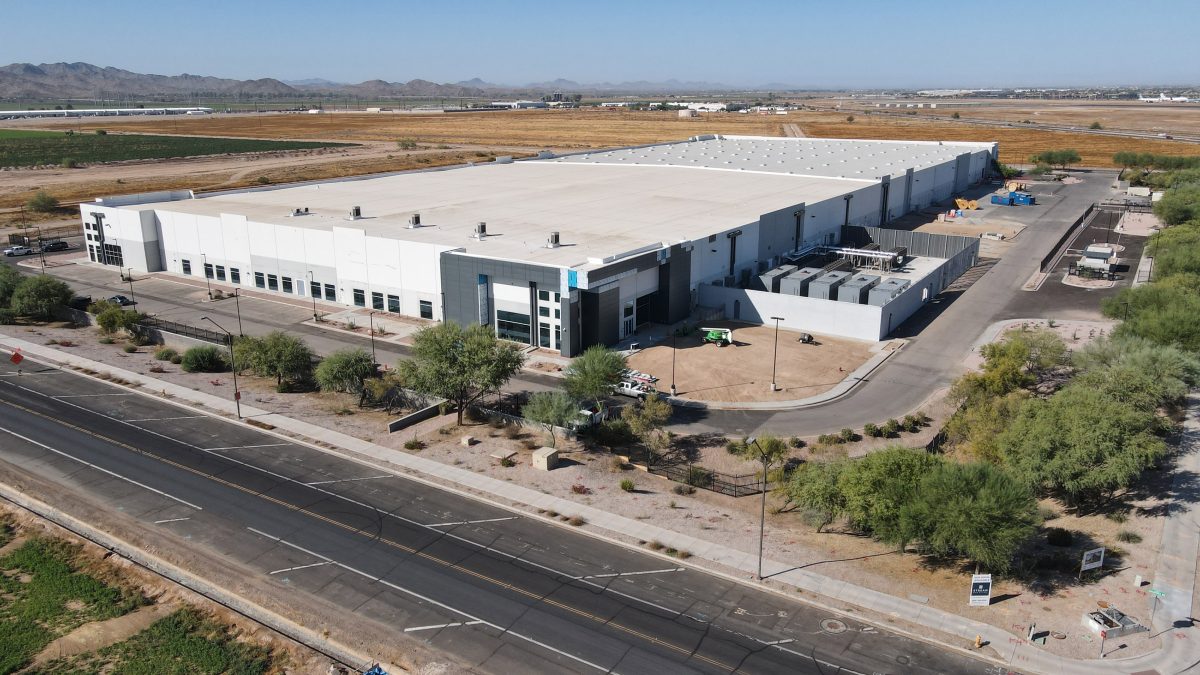
One of the most useful recent studies examined 2023 home sales in Northern Virginia, the nation’s largest concentration of data centers.
Researchers at George Mason University’s Center for Regional Analysis used property and sales characteristics to test whether proximity to a data center was associated with lower home prices. After controlling for the characteristics of the homes and surrounding locations, the researchers found no evidence that proximity to a data center produced an overall negative effect on residential value.
In fact, homes closer to data centers sometimes sold for more. The researchers cautioned against treating this as proof that buyers pay a premium to live beside a server building. Data centers are frequently constructed in well-connected areas with strong utility infrastructure, major roads, employment centers and airports. Those broader location advantages may explain the higher prices.
The study is important because it challenges the assumption that data centers automatically reduce surrounding values. But it does not establish that every data center is harmless to every nearby home.
A regional statistical model may not fully capture the experience of a homeowner whose backyard is directly exposed to cooling fans, generator testing, a substation or a previously open desert view replaced by an industrial building.
Distance is also an imperfect measure. A home one-half mile away behind a freeway or industrial buffer may have less exposure than a home at the same distance with a direct line of sight and no intervening land use.
An emerging 2026 working paper examining multiple data-center markets similarly reported little measurable overall effect on local housing prices. Because that research is still developing, its conclusions should be considered alongside—not instead of—property-specific market evidence.
The fairest conclusion is that the research does not support an automatic data-center discount. It also does not eliminate the possibility of negative impacts in cases involving direct and substantial exposure.
Noise May Be the Most Important Physical Issue
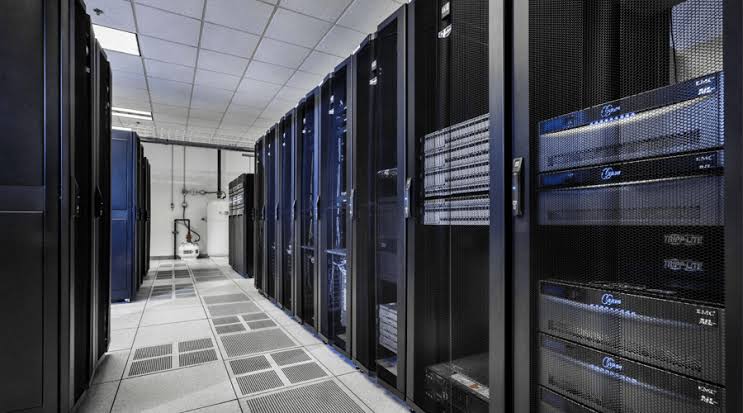
Data centers are often described as quiet because they do not generate the truck traffic, smoke or shift changes associated with some industrial uses. That description can be misleading.
Servers generate heat. Removing that heat can require large cooling systems operating continuously. Backup generators must be tested, and electrical infrastructure can produce a persistent low-frequency hum. Low-frequency sound can be especially difficult because it may remain noticeable indoors even when a conventional sound-level reading complies with a general municipal limit.
Chandler’s data-center ordinance illustrates that these concerns are substantial enough to influence local land-use policy.
Effective in 2023, Chandler restricted new data centers to planned-area-development zoning and required neighborhood notification, public meetings and preconstruction sound studies. The ordinance requires mitigation intended to prevent operating noise from exceeding the existing baseline and calls for annual peak-operation sound studies for five years. It also limits the timing and duration of backup-generator testing.
Those protections do not prove that Chandler data centers have reduced nearby property values. They demonstrate that noise is a foreseeable externality that can be studied, mitigated and regulated.
From an appraisal perspective, actual exposure matters more than the label “data center.”
A well-screened facility in an established employment corridor may generate no observable residential reaction. A facility with audible equipment and direct residential exposure could produce a very different result.
Water, Electricity and the Buyer’s Broader Concern
Arizona data-center debates also involve electricity and water.
Related reporting: Phoenix New Times examines projections for data-center water use in the Phoenix area. The article provides additional context for water-resource concerns; projections should not be treated as measured consumption at an individual facility.
Some facilities use water-intensive cooling systems, while others rely more heavily on air-cooled or closed-loop technology. Electricity demand can be enormous regardless of cooling design. The effect depends on the facility, technology, climate and agreements with the utility provider.
For an individual appraisal, a generalized concern about Arizona’s water supply is not enough to support a property adjustment. Nevertheless, public concern can affect political decisions, development approvals and the reputation of a proposed project.
Buyers may ask whether a large industrial user is competing for scarce resources, whether new electrical infrastructure will be built and whether ratepayers could eventually bear part of the infrastructure cost. Those questions are becoming part of the market conversation even when they have not yet produced a measurable price effect.
A project can therefore affect marketability before it produces a statistically measurable change in value.
Data Centers Are Not All the Same
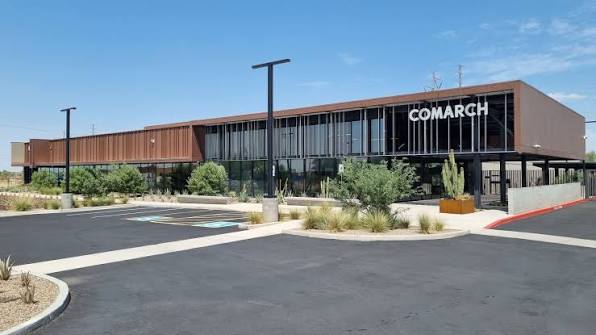
Treating every data center as one property type is another analytical mistake.
Potential impacts depend on:
The size and height of the buildings
Distance from residential properties
Existing zoning and surrounding land uses
The visibility of walls, substations and transmission infrastructure
Cooling-system design
Generator location and testing schedule
Hours and character of construction activity
Landscaping, setbacks and sound walls
Whether the project replaces vacant land, agriculture or another industrial use
Whether the facility brings public infrastructure improvements
A data center replacing an obsolete industrial building may be neutral or even beneficial. The same facility replacing open desert behind a subdivision may be perceived as a loss of view, openness or future residential potential.
That is why broad national claims—whether favorable or unfavorable—cannot substitute for local market analysis.
What Should an Appraiser Look For?
Neither Flock cameras nor data centers justify an automatic adjustment.
The appraiser’s responsibility is to identify whether the market has recognized an influence and, if possible, measure it.
For a camera network, relevant evidence could include matched or repeat sales, buyer and agent interviews, marketing-time differences and whether visible cameras are mentioned positively or negatively during negotiations.
For a data center, the investigation should focus on the actual externalities:
Can the facility be seen from the property?
Can equipment be heard inside or outside the home?
Is the sound continuous, intermittent or limited to generator testing?
Is there new transmission or substation infrastructure?
Did the data center exist when the comparable properties sold?
Are there sales with similar exposure?
Have listings near the facility required larger concessions or longer marketing periods?
Were buyers aware of an approved but unbuilt project?
What land use existed before the facility?
Pending development creates another complication. A proposed project may generate strong public opposition, but controversy alone does not establish a loss in value. The appraiser must distinguish between fear of a possible impact and demonstrated buyer behavior.
On the other hand, waiting for a perfect academic study is not always appropriate. If several otherwise comparable homes with direct exposure consistently sell below protected homes—and the difference survives reasonable adjustments—that local evidence deserves consideration.
The Difference Between Price, Value and Marketability
Not every buyer concern immediately becomes a price discount.
A property may take longer to sell without ultimately closing at a lower price. A seller may offer concessions instead of reducing the recorded sale price. Some buyers may reject a property entirely while another buyer remains indifferent.
These effects can appear first in:
Fewer showings
Longer marketing periods
More frequent price reductions
Larger seller concessions
Failed contracts
Greater variation between initial list and final sale price
That is why an investigation limited to median prices may miss an emerging market reaction.
Marketability can change before value becomes reliably measurable.
So, Have Flock Cameras Affected Youngtown Values?
The honest answer is that we do not currently know—and the available evidence does not justify claiming that they have.
Youngtown values rose after the cameras were first installed, but they rose during an extraordinary metropolitan-wide housing boom. More recently, values have softened at approximately the same rate reported in neighboring Sun City.
No credible study appears to have isolated the camera network from interest rates, inventory, property mix, broader crime trends and the rest of the Phoenix housing market.
There is therefore no support for a blanket Flock-camera adjustment in Youngtown.
That conclusion could change. A properly constructed study might identify a small town-wide safety benefit, a localized privacy or appearance penalty, or no measurable reaction at all. For now, the most defensible appraisal conclusion is that any effect remains unproven.
The Same Caution Applies to Data Centers
Available research does not demonstrate that data centers routinely depress surrounding home values. In some major data-center markets, proximity has not been associated with lower prices after controlling for other location and property characteristics.
But “no average negative effect” should never be translated into “no property can be affected.”
A directly exposed residence with audible mechanical equipment, an industrial view and new electrical infrastructure present a different appraisal problem from a home a mile away in a master-planned community.
The market does not react to abstract property categories. It reacts to what buyers can see, hear, understand and anticipate.
As the aforementioned EdgeConneX facility becomes operational, I will closely monitor neighborhood sales price trends, comparing properties located within a few blocks, ¼ mile, and ½ mile of the facility to identify any measurable differences in market behavior and assess its potential impact on surrounding property values.
The Bottom Line
Flock cameras and data centers represent two versions of the same modern valuation challenge.
Both promise a community benefit. Both collect or process enormous amounts of information. Both can create concerns that are difficult to see in a conventional comparable-sales grid. And in both cases, public debate tends to move faster than reliable market evidence.
The appraiser should neither dismiss those concerns nor convert them automatically into adjustments.
The proper questions remain:
What is the property’s actual exposure? Are buyers aware of it? Do they care? And can their reaction be demonstrated in the market?
In Youngtown, the evidence presently does not show that its dense Flock camera network has independently raised or lowered home values.
For data centers, the growing body of research suggests that broad regional effects may be neutral, while individual properties with direct noise, visual or infrastructure exposure still require careful investigation.
Technology may change quickly. The standard of proof in an appraisal should not.